Showing posts with label YA Novel. Show all posts

Feb 20, 2014

#HubChallenge: Maggot Moon

I'm starting off my Hub Reading Challenge! If you want to follow my progress, I'm compiling all of the entries over here and if you want to read more about the Challenge, you can do so over at The Hub.


Title: Maggot Moon
Author: Sally Gardner
Award/List: Printz Honor

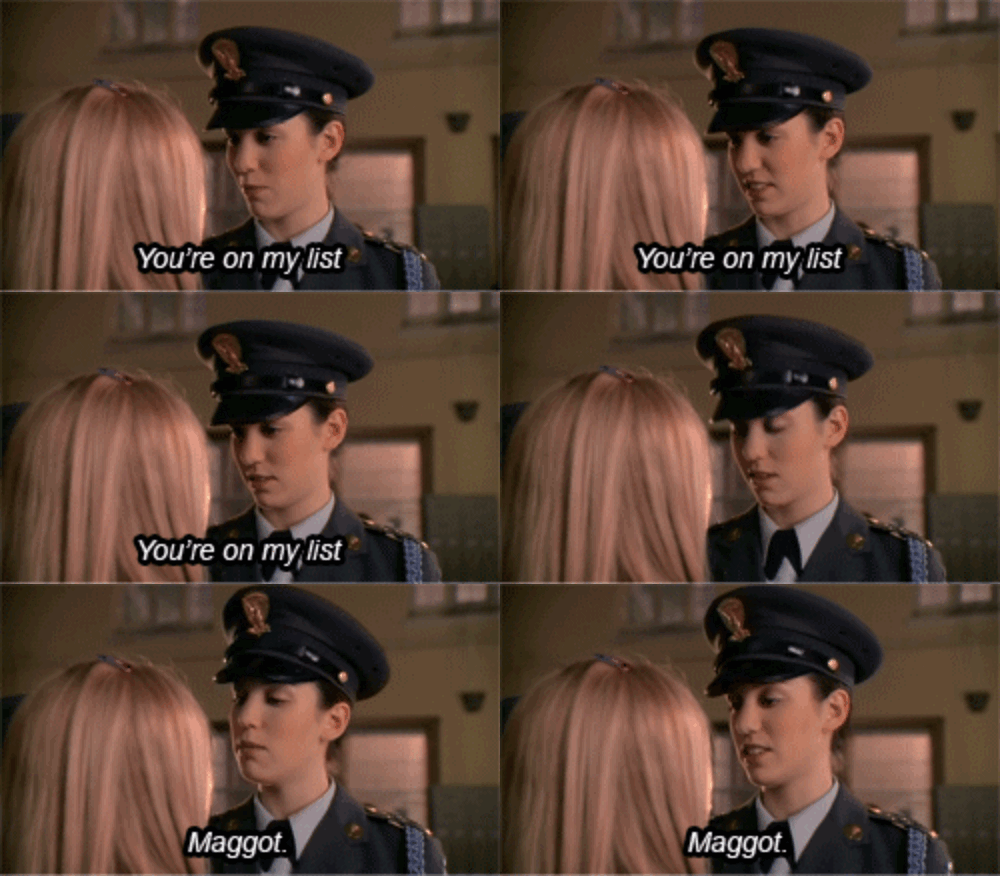
This is going to sound weird, but I really wanted to read this book and get it out of the way.  I hate the word maggot.  So much.  It's bizarre.  Growing up, it was very difficult to watch Cadet Kelly when it aired (all of the time) on Disney.


Sadly, I read this as an ebook and for some reason it did not contain the illustrations that accompany the story.  I actually didn't even realize there were illustrations until I looked at the ALA description of the book.  I did enjoy the story without them, but now I'm worried that I missed a lot of insight and story. But, I did jump into this book blindly and was pleasantly surprised.

The story as I read it: Standish and his grandfather live in the lowest of the sectors of a totalitarian Motherland, just barely getting by. Oppression surrounds Standish at home, school and the playground. After being subjected to extreme violence on an almost daily basis, Standish and his grandfather take action to shine a light of truth on the Motherland's projection of reality. Soon everyone will know what's beyond the wall.

It's a story about friendship, trust, and rebellion.  Definitely worth picking up.  It was a fast read, but then again, I read it without the pictures which I'm really sad about! Has anyone read it with the pictures? AKA how it's supposed to be read? Should I stumble into a bookstore and flip through a book?

Feb 4, 2014

Top Ten Tuesday: Books That Will Make You Cry

How fitting that this week's Top Ten Tuesday is books that will make you cry, because I was holding back tears this morning on the commute to work.  It was only partly because the train was grossly overheated and stuffed with people refusing to acknowledge that my lap was an inappropriate place to put their foot.  I wasn't even seated.  No, I was finishing a tearjerker this morning so I will use that to start my

Top Ten Books That Will Make You Cry:

1. If I Stay, by Gayle Forman


Mia and her family are in a fatal car crash. While the rest of her family dies on impact, Mia is the only one still holding on. Mia's spirit moves outside her body, wandering the hospital where doctors struggle to save her life and watching her remaining loved ones try to cope with the huge loss.  She struggles with the decision to continue her life without her family or move on to be alongside them.  A film version is being released later this year.

2. The Fault in Our Stars, by John Green


This is the book that everyone says makes them cry.  I wanted to prove everyone wrong and not cry when I read it last year, but it was absolutely impossible.  Again, the film version is out later this year (YA lit is pretty trendy, eh?)

3. Harry Potter and the Deathly Hallows, by JK Rowling


Dobby.  That is all.

4. Thirteen Reasons Why, by Jay Asher


Hannah committed suicide two weeks ago and left behind thirteen cassette tapes detailing the reasons why she decided to end her life. The tapes are passed from one person to another, so they can listen to what they did that resulted in her ultimate decision.

5. The Book Thief, Markus Zusak


Set during the Holocaust, Liesel shares the books she steals with her neighbors and the Jewish man her family is helping to hide.  Narrated by death, it's a very powerful book that offers a new perspective on a terrible time in history.  I know a movie was released last year (again, trend), and it is still upsetting to me to this day.

6. Speak, by Laurie Halse Anderson


When my 7th grade teacher read the first page aloud to us in an effort to booktalk it, it came across as an hilarious book. And while it is humorous at times, it doesn't shield the reader from the horrific experiences Melinda goes through in one year of high school.

7. Where the Red Fern Grows, by Wilson Rawls


I read this for class in 5th grade.  I believe it's my first encounter with the phenomenon of "dogs on the cover usually die inside the book."

8. The Five People You Meet In Heaven, by Mitch Albom


I mean, this book is designed for that purpose, no?

9. Charlotte's Web, by E.B. White


The message of this book, as so delicately put by Phoebe from Friends: "The spider, she dies, she dies. She has babies and dies. It's like, you know: Hey, welcome home from the hospital. Thud."  Okay, not the message, but it definitely brings on the heartache.

10. The Perks of Being a Wallflower, by Stephen Chobsky


I didn't actually cry the first time I read this novel.  The second time through, though, I started picking up all of the clues foreshadowing the ending and it really had an emotional impact on me.  Such a great book. 

Check out more tearjerker lists over at The Broke and the Bookish!

Jan 26, 2014

Review: Bumped

Before I get into my feelings on Megan McCafferty's dystopia Bumped, I'm working at the library right now and the teens here just taught me a neat trick. If you smash your phone's touchscreen, something many people are prone to do, you can put tape over the crack and the touchscreen will still function.  As someone who fears breaking touchscreens, this is fantastic information.

Moving along.

Bumped. A dystopia where teen pregnancy is a blessing, even encouraged by the adult population.  Why? Because due to a virus, practically no one over the age of 18 can procreate. As soon as a teen girl becomes fertile, she is to get pregnant ASAP and hand over the baby to the highest bidder. Teens are even hired as "pros" and essentially pimped out for their highly esteemed genetic qualities. Within this universe, there lies a religious community who is against this way of life, preferring their infants to be born into families. Identical twins Melody and Harmony were separated at birth, each living in a different area.  When they meet, the entire "bumping" system is set to come crashing down around them.

If I didn't already know this before, I certainly know it now. I am officially tired of the dystopia trend.  Having thoroughly enjoyed McCafferty's Jessica Darling series, I assumed that I would enjoy her dystopia.  I was wrong.

There's a chance that my overexposure to dystopias is what caused me to dislike this novel so much, especially because there are positives to consider.  For instance, the reader is immediately thrown into the universe. There's no long explanation of how the nation got to this point (as evident in dystopias like The Hunger Games and Divergent - where it's even more out of place as their first person narration should deem the background unnecessary).  Instead, the Bumped reader dives right into the strange lingo and new concepts and must fill in the blanks as they progress through the story.

Unfortunately, the plot not only tends to run in place to fill up pages, but also relies on cliche characterizations of religious people to forward the action. It was a struggle for me to get through the entire novel and I think I may just read a summary of the sequel (because even when I dislike a series book, I still need to know what happens).

If you're interested in a dystopia that focuses on reproductive rights, I would suggest that you instead try Neal Shusterman's Unwind or Margaret Atwood's The Handmaid's Tale.

Jan 17, 2014

Review: A Mango-Shaped Space

A Mango-Shaped Space, by Wendy Mass, is a title that I have consistently recommended to students but, as of December 2013, had never read myself.  I knew that it was realistic fiction about a girl who saw letters and numbers in color (synesthesia), that the novel made many people cry, and that there was a cat named Mango (three guesses as to why everyone cries; hint: my theory about books with dogs on the cover).


After recommending it so many times and consistently getting positive feedback from the readers, I decided it was time to actually read it myself. I loved it.

At the start of the novel, Mia reflects on a traumatizing third grade experience when she tried to explain the proper colors for each number to her math class.  Ridiculed by her teacher and classmates when they did not follow along, Mia was forced to keep her visions a secret. But when she starts algebra, the combination of numbers and letters makes her secret too much to bear. Mia learns that her condition has a name, synesthesia, and dives into a world of information.  Mia must balance her new appreciation of her colorful life with her classwork, friends, family, and her cat Mango, whom she believes contains a piece of her grandfather's soul, a man who had always understood her in more ways than she could have known. 

I really welcome stories that offer new perspectives.  You can never really see what another person sees, especially in Mia's case. What I enjoyed most about this novel was the emphasis on trust.  Mia experiences so much disbelief from others: her teachers, classmates, parents, even her best friend, that it's heartwarming to see her remain so trusting as she works to educate both herself and others about her condition. It's also important for the child and young adult readers to experience the distrust and teasing that Mia encounters in her quest for the truth.

I think the only aspect of the novel that bothered me was the fact that she never got caught for falsely going to acupuncture to heighten her synesthesia. If you've read it, did that bother you?

Nov 19, 2013

#TheList, No. 802: Lord of the Flies

When I was in the ninth grade, almost all of my friends were reading Lord of the Flies in English class as their first reading selection.  Not my class; we were reading A Separate Peace.  At the end of the year, my teacher confessed that we didn't read Lord of the Flies because a) she hated it; and b) she believes that starting with the most boring novel in the world is a good way to let her students know that her class will not be a walk in the park.  She was my favorite teacher for a reason.


After a plane crashes on an uninhabited island, a group of young boys must figure out how to survive without the adult supervision to which they are accustomed. There is an initial attempt to maintain order: electing a chief, establishing conduct rules for meetings, and organizing themselves into hunters and builders. Eventually the structure breaks down as the boys' primitive nature begins to emerge. Their remote existence encourages power struggles, bullying, and deadly violence.

It wasn't exactly my cup of tea, but I can understand and appreciate it's significance. The symbolic presence of democracy (the conch and their meetings), the metamorphosis from a civilized to natural state, and the contrast of rational thought versus irrational instincts are all concepts that are explored thoroughly in this tale of survival (and make great essay topics).  The power struggles are foreshadowed almost immediately, which can make for some tense reading when you just know something horrible is about to happen.  The allegorical characters and their actions elicit both sympathy and apathy from the reader, which makes for a rapid emotional changes as the reader moves along with the story. 

Because the YA world is overrun by dystopias, I would align Lord of the Flies with Michael Grant's Gone series due to their similar themes.  In Gone, everyone over the age of 15 disappears simultaneously, leaving the children to fend for themselves. Naturally, there are power struggles and violence as the children try to figure out what is happening. While the series falls more into the sci-fi/supernatural genres, the adventure, survival, and power structure elements are great parallels to the high school English class standard that is Lord of the Flies.

Oct 11, 2013

#TheList, No. 1001: Finding Violet Park

Through a strange turn of events, teenager Lucas Swain gains possession of an abandoned urn containing the ashes of a Violet Park. While researching Violet, Lucas unknowingly begins to call up his father's mysterious past. Lucas' father disappeared five years ago.  No one knows where or why he ran away, or if he ran away at all. Lucas is frozen in time, clutching onto his father's belongings because he doesn't have the memories to sustain him.  His research, however, finally allows Lucas an out, as he learns that "dead" doesn't just have to be a physical condition.  


Finding Violet Park, by Jenny Valentine, was originally published in London. It was later republished in America as Me, the Missing, and the Dead, which is the title I picked up and, after finishing the book, that I prefer. I don't know if I would have picked up this book if it weren't on The List, but I'm glad I read it. I enjoyed the various perspectives of the missing and the dead. Dead doesn't have to mean "dead" if that person's memory and life remain with you. On the other hand, missing can can equate with dead - Lucas' father is gone and no longer a worthy part of his life. Lucas' actions at the close of the book confirm his feelings on this matter. The newer title creates three categories that, throughout the course of the novel, Lucas realizes can all be intertwined depending on his actions. For five years, he's been missing his life, instead clinging on to what is no longer present. Finding Violet Park is just a small piece of the puzzle that leads him to eventual catharsis. 

The novel contains dark humor (for instance, Lucas provides a list of good reasons to make friends with a dead lady in an urn), realistic portrayals of family and extended family, and an interesting mystery to carry forth the discussion of what it means to be dead or missing.  It'd be an interesting choice to include in a Halloween display as it's spooky in a nontraditional sense.  

Oct 3, 2013

Reconstructing Amelia

I love a good mystery. When the pieces all fall into place, it is such a satisfying reading experience (I'm looking at you Casual Vacancy).

Well-written mysteries have pieces that fit like a puzzle. But you know when you're putting together a 500 piece puzzle and you convince yourself that two pieces absolutely go together, so you hammer them down like there's no tomorrow? Sometimes that's what Reconstructing Amelia feels like.


Let me back up.  Reconstructing Amelia follows Kate, a single mother/attorney, as she copes after her daughter Amelia's alleged suicide.  Unwilling to believe that her daughter killed herself, Kate sorts through her daughter's electronic life and enters a terrifying world of bullying, hazing, secret clubs, and possible school cover-ups.  The perspective alternates between past and present day Kate, past Amelia, and collections of texts, Facebook statuses, and e-mails.

For the most part, I really enjoyed the book. It takes on a hot button issue (cyberbullying), incorporates other prevalent young adult issues (LGBT, popularity, identity) and presents a thoughtful critique of our online world(s). The teen voices are not forced and the blame for their actions isn't placed entirely on their shoulders. However, in what appears to be an attempt to create a lot of "gasp" worthy moments, some of the revelations read as if they're too hammered into place to fit.

But all in all, it's a satisfying read. If you're okay with overlooking a more farfetched conclusion and enjoy mysteries, I would pick up this book, preferably before the Nicole Kidman movie version premieres. Due to the subject matter, teens may find this an interesting reads, provided they're mature enough to handle the heavy amount of profanity, sexual scenes, and talk of cutting.

Sep 23, 2013

Banned Books Week!


Banned Books Week is one of my favorite weeks in the library world.  Too many people don't realize that the censorship of challenged books is not just a thing of the past. While I obviously don't love how books and other materials are still censored, I do love drawing awareness to this fact and encouraging readers to defend their right to read the books they find interesting.

You can learn more about BBW at the ALA Website.  


Sep 10, 2013

Top Ten Tuesday: Books I Would Love To See As A Movie/TV Show

It's no guarantee, but sometimes books work as TV shows and movies.  They aren't always perfect copies (alright, they never ever are), but they translate well to a visual media.  In a perfect world where the end result would be a flawless movie or television show, here are my

Top Ten Books I Would Love To See as a Movie/TV Show

1. Unwind, by Neal Shusterman
This series has a lot of suspense, action and character development that could easily translate into a TV show.

2. Stephanie Plum By the Numbers Series, by Janet Evanovich
Yes, they tried this as a movie with Katherine Heigl and anyone could see that it was going to fail miserably. 1. It should be a television show. 2. Betty White should be Grandma. It would be can't-miss TV.

3. The Giver, by Lois Lowry
It might be incredibly difficult to capture the essence of this novel on film, but it would be a decent start if Morgan Freeman was cast as the titular role.

4. I Hunt Killers, by Barry Lyga
So as not to draw out the action too much, I think this would be best as a miniseries.  Allegedly, this title is in the works for an ABC Family series, so hopefully they preserve the sheer epicness that is this novel (and it's sequel).

5. Every Day, by David Levithan
The pursuit of an impossible relationship is the basis of many a successful movie, and I think this novel could make for an interesting addition. Difficult casting for sure as A would need to be portrayed by more than a handful of actors. There are great lessons to be found in these pages that could translate well to some cinematic interpretation.

6. Night Circus, by Erin Morgenstern
This one is listed as "in development" on IMDB and I'm not surprised: It's a great story and the sets for this book would look utterly fantastic on the big screen if done correctly.

7. The Mother Daughter Book Club, by Heather Vogel Frederick
I think this series is really sweet and would make for a cute Disney Channel type show.  It could be cast with fresh faces to be scrutinized later in their careers when they stop being prepubescent. But I do think this would make a fun addition to TV, especially because children's literature would be openly discussed on TV.

8. The Cuckoo's Calling, by Robert Galbraith J.K. Rowling
I'm thinking BBC series for this one. They can do no wrong. And with such amazing material, it would be near impossible to.

9. Bossypants, by Tina Fey
I know this is a weird addition. I've read the book and I've listened to the audiobook read by Fey herself. But I want to watch Tina read this book. Seriously, plop her down on a stool, have her read from the book, and film it. I would buy a ticket to see that and I hate paying to go see movies. Comedy gold.

10. Hex Hall, by Rachel Hawkins
Perhaps it's because I just finished the second book in this trilogy, but I think this would be a fun TV series (if we weren't suffering from paranormal romance/adventure overload). It's funny, contains magic, and has a sarcastic female lead.  I can definitely see myself binge-watching this on Netflix.

Sep 7, 2013

Openly Straight

Rafe is an openly gay teenager in Boulder, CO, a place where his sexuality is rarely looked down upon. His friends and family are more than supportive; his hippie parents even threw him a surprise coming out party.  But Rafe is tired of always being labeled as "the gay guy." There's more to him beyond his sexuality. So Rafe heads out to a brand new, all boys boarding school and willingly puts himself back in the closet so his other traits can shine through.  What follows is an interesting exploration of how Rafe can or cannot be true to himself when he omits a major aspect of his life and how this omission impacts not only his actions, but his peers' as well. 


In Openly Straight, Bill Konigsberg puts an interesting twist on the LGBT young adult novel. Many times the struggle is coming out or finding acceptance as a gay teen, but here the struggle (in Rafe's original assessment) is finding acceptance as a regular guy. Konigsberg explores labels outside of "gay" and how pigeonholing people into these roles almost never reflects accurate assessments of their lives.  Eventually Rafe comes to meaningful realizations about how he perceives himself as a result of his experiment.

I would recommend this book to any teen who shows interest in LGBT literature, particularly because it is a refreshing plot.  The focus on other teen issues is also prevalent and would appeal to teens looking for books that deal with bullying, depression, exploration of sexuality, and/or school hierarchies.  Sometimes books about LGBT issues can be (rightly) overly emotional. This book succeeds in discussing difficult topics with humor. It's a very, very funny book with a lot of heart.

P.S. I knew I loved this book when on page 12, a boy is described as wearing a shirt that says "I Want to Go To There." Later, my love was reaffirmed when a character states that he's upset because he didn't get tickets to the New Kids on the Block reunion tour.  

Sep 3, 2013

Top Ten Tuesday: Books that Should be Required Reading/Contemporary-Classics Pairings

Now that I'm back in school mode, it's good to be thinking about the educational value of the books I push on recommend to students.  So for this week's Top Ten Tuesday:

Books that Should be Required Reading

1. The Book Thief, by Markus Zusak

This one has already popped up in a number of school syllabi which is fantastic.  There's so much in this novel that students can work with: perspective, heroism, setting, etc.  It's also an incredible read that I recommend to everyone (my Aunt just finished...).

2. Wonder, by R.J. Palacio


I think this novel lines up well with a lot of the anti-bullying rules that schools are now (hopefully) enforcing. The multi-perspective novel shines a light on what people may experience on account of being different and how "normal" people react to said different people.

3. The Westing Game, by Ellen Raskin


Okay, this is just one of my favorite books ever, so I'm being biased.  But I read this in school and it was the best unit ever. It's a great book for putting clues together, searching for foreshadowing, and examining character motives.  Plus, it is amazing.

4. Monster, by Walter Dean Myers


Some students don't respond to novels, so it's useful to bring other formats to the table. Monster offers a lot of literary techniques, and it could be the source of a classroom debate over who is guilty.

Contemporary Books Paired With Classic Required Readings

5-6. Unwind, by Neal Shusterman and Frankenstein, by Mary Shelley


If there was ever a dystopia that I would recommend for school assignments, Unwind would be it and I think it would pair well with Frankenstein.The Gothic classic deals with the questions of who is to blame for crime (the creator or the creation?) and what happens when man plays God (bad things)? Unwind tackles similar problems through the ownership over a person's life and organs.

7-8. Dodger, by Terry Pratchett and Oliver Twist, by Charles Dickens


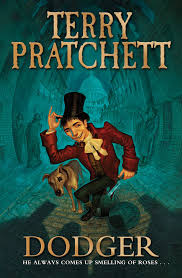
It makes sense because Dodger comes from Oliver Twist and Dickens himself is a character in Pratchett's novel.  It would make for fun classroom activities to note the connections between the two novels.

9-10. When You Reach Me, by Rebecca Stead and A Wrinkle in Time, by Madeleine L'Engle


I mean, Wrinkle plays a pivotal part in When You Reach Me, so it only makes sense that the two should be paired together.  Plus, think of the complex time travel papers those 5th graders could write as a result!!

Check out more books at The Broke and the Bookish!

Aug 30, 2013

Friday Five: Taking a Stand Books that Aren't Dystopias

I'm reading Partials, by Dan Wells, right now because the teens kept telling me that they loved it.  And I agree with them. The addition of a scientific focus has been refreshing, and I'm really enjoying the book.  But...I'm getting dystopia fatigue.  I've been reading and keeping up with dystopias over the past 2 years because that's where my students show a ton of interest.  They're all jumbled up inside my head and keeping up with the sequels has become exhausting.  Which reminds me, whatever happened to the single serving novel?

So here are five books that share the dystopian spirit of challenging institutions and/or the norm and taking a stand, but that aren't classified as dystopian.

1. The Miseducation of Cameron Post, by Emily M. Danforth


Cameron is a closeted lesbian growing up in the 90s in the middle of America. On top of that, she lives with the guilt that her sexuality is the reason her parents were killed in an accident. Her religious guardian sends her to a conversion camp where Cameron decides to stand up for her feelings and demand respect.

2. The Loud Silence of Francine Green, by Karen Cushman


Set in Hollywood during the Red Scare, Francine Green focuses on how people need to look for the truth and not just accept the news as delivered by others. Francine was a meek and timid girl, always following the instructions of the nuns at her Catholic School. Then she meets Sophie, a loudmouthed girl who can't control herself and her desires to hold impromptu anti-bomb protests, and suddenly she questions why she has always been so accepting of what she is told.

3. The White Bicycle, by Beverly Brenna


In this novel, the institution is Taylor Jane's mother, a woman who doesn't believe teenage Taylor is capable of taking care of herself because of her Asberger's Syndrome. The mother is also representative of all who doubt the abilities of those with developmental disorders.  Taylor takes control of her life, going out on adventures without her mother's permission, and learns more about herself along the way.

4. Does My Head Look Big in This?, by Randa Abdel-Fattah


Amal makes the decision to wear the hijab full-time as a reflection of her faith. Her family, friends, and school aren't sure this is the right move. As the only Muslim at her school, a school that has a strict uniform policy, it's hard to find understanding. Her family and friends worry that Amal's decision will alienate her and attract problems. Regardless, Amal stays true to her decision and embraces her faith in the eyes of the public.

5. The Evolution of Calpurnia Tate, by Jacqueline Kelly


It's the end of the nineteenth century in Texas, and Calpurnia is more interested in charting the differences between grasshopper types than learning how to sew.  The society she lives in requires her to be more feminine, after all, she's going to be someone's wife one day.  However, Calpurnia puts that aside and joins her grandfather in his scientific endeavors.

Aug 28, 2013

Before I Fall

Samantha Kingston dies in a car crash...then she wakes up in the morning and relives her last day on earth. It happens again and again without reason. Even changing her behavior and patterns doesn't prevent her from reliving "Cupid Day," the Friday before Valentine's Day where students send roses to one another as a sign of popularity (think "Four for you Glen Coco, you go Glen Coco!"). Reliving Cupid Day shines a new light on Samantha's outlook on her friends, her less than affectionate boyfriend, her family, and the outcasts she looks down on. She's quite literally forced to face herself and make changes before she can move on, whether or not it's in life or death.


Lauren Oliver's Before I Fall is pretty popular with the teens at my school.  I can see why. The cover is attractive, and it has an interesting premise, good lessons, and high school drama from varying angles that any tween/teen can connect with.  Originally I felt that it wasn't the best written book - as the day repeats, characters seemingly change motivations - but when I realized this was happening as a reflection of Samantha's maturing, I had a lot more respect for the work. It still feels clumsy here and there, but for teens looking for a realistic plot about self discovery and life lessons, it's a respectable choice.

And yes, it is a less funny Groundhog's Day in YA novel form.

Because I mentioned it above: 

Aug 18, 2013

Poker Face


I'm still working on my quest to become a real live (read: full-time) librarian.  In the meantime, I've been reading everything I can get my hands on, forcing myself to stop reading the books I'm not enjoying, adding more and more to my list of books to read one day when time stands still and I can finally finish the list, and working as a temporary teen librarian! Woot!

Working in a public library has been a vastly different experience than the school libraries that I'm accustomed to.  For starters, teens are far more willing to tell you that they love 50 Shades of Grey in a public library than they are in a school setting.  And for that, I am grateful.  Why? Because it gives me a lot of practice using my non-judgmental poker face.

Scenario: Teen wants a book that's "a little dark, a little romancey...and I read 50 Shades already"

Me on the outside:

Me on the inside:


Scenario: Teen is trying to figure out how many books she should check out for her vacation. She decides on 4 because she's "a fast reader because [she] was able to read the entire 50 Shades series in 3 weeks."

Me on the outside:

Me on the inside: 


But real talk. I love when teens check out the books that they want to read, even if I'm not a personal fan of those titles. I also love that they have no shame (and they shouldn't) about what they've read and that they want to share what they've read with me. It's awesome.